
Need it handled? Call (317) 766-4566
Wall Framing Repair in Indianapolis, IN: Q&Q Property Solutions serves Indianapolis and the surrounding area. Call (317) 766-4566 for a free estimate.
TL;DR: Wall framing damage in Indianapolis homes develops from clay soil movement, freeze-thaw cycles, and moisture intrusion - often silently until visible cracks, sticking doors, or sloping floors appear. Early repair of 1–3 damaged studs costs $500–$1,500; delayed repair allowing rot to spread escalates costs to $4,000–$10,000+. If you spot diagonal cracks at window corners, bowed walls, or gaps between walls and ceilings, document the damage and schedule a structural inspection before the problem compounds.
In This Article
- What Is Wall Framing and Why Does It Fail in Indianapolis?
- What Are the Most Common Signs of Wall Framing Damage?
- How Do Indianapolis Homes Develop Framing Damage Over Time?
- How Much Does Wall Framing Repair Cost in Indianapolis?
- When Should You Repair vs. Replace Wall Framing?
- What to Do When You Spot Framing Damage in Your Indianapolis Home
- Finding Reliable Wall Framing Repair in Indianapolis
- Recommended Fence Installation in Indianapolis: Q&Q Property Solutions
- Frequently Asked Questions About Wall Framing Repair in Indianapolis
- Next Steps: Get Your Framing Inspected
What Is Wall Framing and Why Does It Fail in Indianapolis?
Wall framing is the skeleton of your home - the studs, beams, and connections that carry the weight of your roof, floors, and walls down to the foundation. Learn more about structural framing damage in older Indiana homes. When framing fails, your entire structure is at risk. Here in Indianapolis, wall framing damage develops faster than in many other regions because of our specific soil and climate conditions.
Marion County sits on clay-heavy glacial till soils (primarily Brookston and Crosby series) that expand and contract seasonally with moisture changes. (Usda.gov) This soil movement - typically 1–2 inches annually - transfers constant stress directly into your home's foundation and wall framing over decades. Add to that the freeze-thaw cycles Indianapolis experiences: roughly 40–50 days per year when temperatures cross the freezing point, loosening fasteners, opening joints, and accelerating wood deterioration in studs and sill plates.
Pre-1960 homes in neighborhoods like Irvington, Fountain Square, and Herron-Morton Place often feature balloon framing - continuous studs running from foundation to roof - which has distinct failure modes compared to the platform framing common in 1950s–1970s ranch homes. Pre-1970 framing lumber was also graded to lower standards than modern lumber, making older studs more prone to splitting and rot.
The result: Indianapolis homeowners, especially those in older housing stock, face accelerated framing damage that rarely announces itself until it's advanced. Catching it early is the difference between a $1,000 repair and a $10,000 structural overhaul.
What Are the Most Common Signs of Wall Framing Damage?
The key warning signs of wall framing damage fall into two categories: visual cracks and physical movement. Learn to distinguish between cosmetic settling (normal) and structural concern (urgent).
Visual and Physical Warning Signs
- Diagonal cracks at door and window corners. These 45-degree cracks radiating from the corners of openings are a documented indicator of framing movement. A crack ≥1/4 inch wide warrants professional evaluation; hairline cracks (<1/16 inch) are typically thermal settling.
- Doors and windows that stick, bind, or won't close. According to Michaeliscorp, sticking doors and windows are often one of the first, and most overlooked, signs of a shifting or settling foundation. When studs shift or bow, door and window frames become misaligned.
- Visibly bowed or bulging walls. Stand back and sight along an interior or exterior wall. A deflection exceeding approximately 1 inch per 8 feet of height (the IRC threshold for structural concern) indicates framing stress.
- Floors sloping toward walls or feeling spongy. Sagging or uneven floors suggest compromised rim joists, sill plates, or floor framing. This is especially common in basements where moisture has rotted the sill plate connection.
- Gaps between walls and ceilings or between walls and floors. As framing settles unevenly, gaps open up. These are red flags for foundation or framing movement.
- Drywall nail pops in patterns. Scattered nail pops are normal; a cluster of pops in a line or corner suggests framing movement pulling fasteners loose.
- Exterior walls separating from interior walls. Look for visible separation where an exterior wall meets an interior partition. This indicates differential settlement or framing failure.
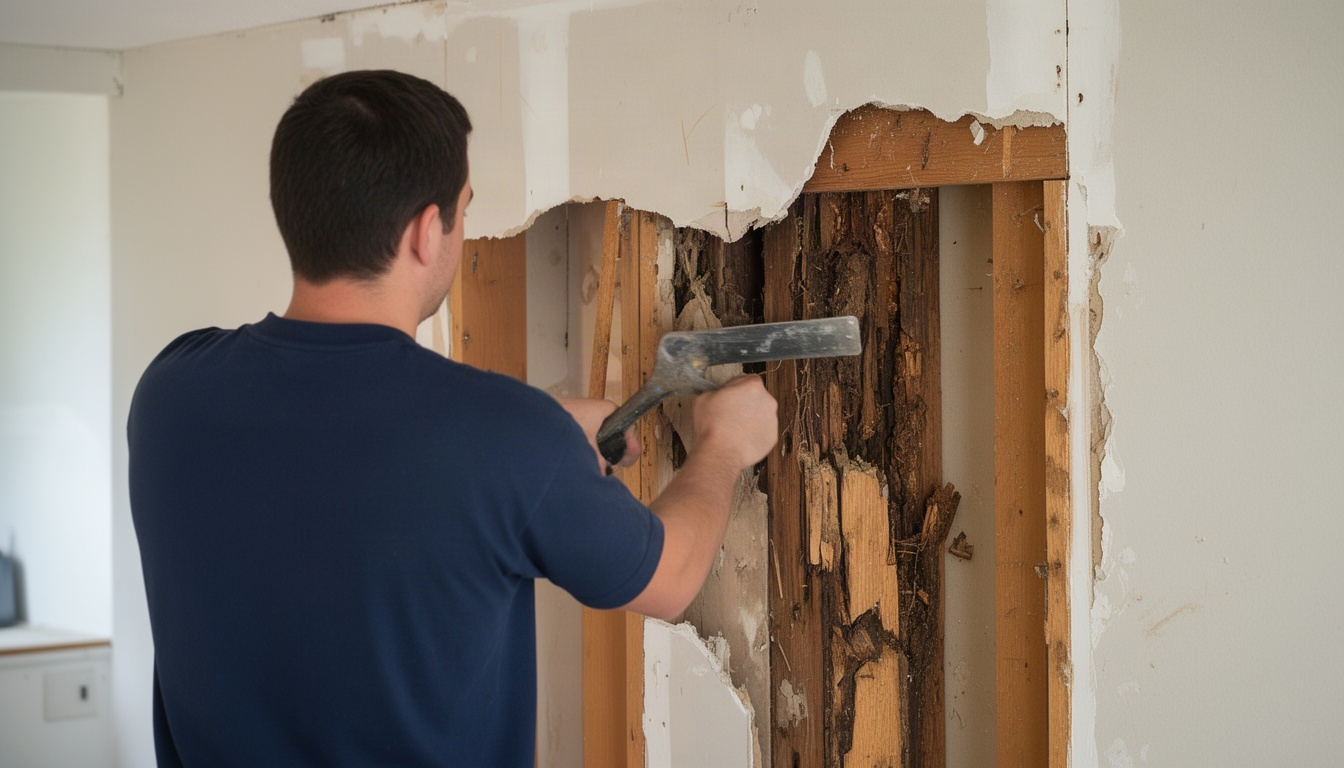
- Visible rot, discoloration, or soft spots in studs or sill plates. Moisture-damaged wood appears dark, feels soft when probed, or crumbles. This is active framing failure.
- Musty odors in walls or crawl spaces. Mold and rot produce a distinctive smell, often the first sign of moisture-compromised framing before visible damage appears.
Cracks That Signal Framing Problems vs. Normal Settling
Not every crack is structural. According to Jonathan Homes, cracks wider than 6mm are a key indicator of structural issues, and vertical and hairline cracks are usually harmless settling, but horizontal, diagonal (45-degree), and stair-step cracks are serious red flags that need immediate professional attention.
Cosmetic cracks are hairline (<1/16 inch), horizontal or vertical, isolated, and stable over months. They result from normal thermal expansion and contraction. Structural cracks are ≥1/4 inch wide, diagonal (especially at corners), growing over time, or accompanied by other signs like sticking doors or sloping floors. Photograph any crack wider than 1/4 inch and monitor it monthly. If it grows, call a professional.
Interior vs. Exterior Wall Framing Warning Signs
Interior walls (non-load-bearing partitions) often show damage through drywall cracks, nail pops, and door/window binding. These are typically less urgent but still warrant inspection if widespread.
Exterior walls (load-bearing) are more critical. Watch for exterior cracks in masonry or siding, interior diagonal cracks at corners, and gaps between the exterior wall and roof line. Exterior wall failure can compromise your entire structure and allow water intrusion, accelerating damage.
How Do Indianapolis Homes Develop Framing Damage Over Time?
Most wall framing damage develops from three root causes: moisture intrusion, soil movement, and deferred maintenance. Learn more about Signs You Need a Retaining Wall for Drainage and Erosion. Learn more about framing costs in the Indianapolis area. Understanding the pathway helps you act before damage compounds.
Moisture intrusion is the leading culprit. Water enters through roof leaks, foundation cracks, or poor drainage around the home's perimeter. Once moisture reaches studs or sill plates, wood begins to rot. A small leak ignored for two years can rot an entire stud bay, transforming a $500–$800 early repair into a $4,000–$8,000 full-wall reframe. Here in Indianapolis, basement water intrusion is especially common in areas near Eagle Creek and other low-lying neighborhoods where seasonal high water tables increase hydrostatic pressure on foundation walls.
Soil movement is relentless. Our clay soils expand when wet (fall/winter) and contract when dry (summer). This annual cycle stresses the sill plate connection and foundation-to-framing interface. Over 30–50 years, this movement loosens fasteners, opens joints, and creates pathways for water infiltration. Pre-1960 homes with balloon framing are particularly vulnerable because the continuous studs amplify stress across multiple floors.
Pest damage compounds the problem. Termites are prevalent throughout Central Indiana, including Marion County. Subterranean termites tunnel through studs, hollowing them from the inside. By the time visible damage appears, structural capacity may already be compromised. Carpenter ants and wood-boring beetles cause similar damage.
Deferred maintenance accelerates all three. A roof leak left unrepaired for one season, a gutter clogged for years, or a foundation crack sealed with caulk instead of properly waterproofed - these small oversights create the conditions for rapid framing deterioration.
The timeline is sobering: a hairline crack at a window corner (year 1) → visible stud rot in the wall cavity (year 3) → structural failure risk (year 5+). Early intervention - catching and stopping the moisture source, replacing one or two damaged studs - costs a fraction of what full-wall replacement demands.
How Much Does Wall Framing Repair Cost in Indianapolis?
Wall framing repair in Indianapolis typically ranges from $500 to $10,000+, depending on scope, whether the wall is load-bearing, and whether hidden damage (rot, pests) is discovered during work.
Cost Breakdown by Scope
| Repair Type | Cost Range | Notes |
|---|---|---|
| Minor stud repair (1–2 studs, non-load-bearing) | $500–$1,500 | Includes removal, replacement, drywall repair |
| Single wall reframe (3–4 studs, non-load-bearing) | $1,500–$4,000 | Includes temporary support, new lumber, fastening |
| Load-bearing wall repair | $4,000–$10,000+ | Requires temporary shoring, engineering review, permits |
| Rot or pest damage discovered during repair | +$1,500–$3,000 | Adds containment, treatment, extended framing replacement |
Transparent Cost Calculation Example
Two damaged studs in a non-load-bearing interior wall:
- Labor (removal, replacement, fastening): 2–3 hours × $175/hour = $350
- Materials (2 studs, fasteners, blocking): ~$120
- Drywall patch and finish: ~$200
- Total: ~$670–$820
Compare this to the same damage left for two years: rot spreads to adjacent studs and rim joist, requiring full-wall reframe ($4,000–$8,000) plus potential mold remediation ($2,000–$6,000). Early action saves thousands.
Factors That Increase Cost
- Load-bearing wall status. Temporary shoring and engineering review add $1,500–$3,000.
- Permit requirements. Indianapolis requires permits for structural framing work. Learn more about Fence Permits in Johnson County Indiana: 2026 Guide. Permit fees typically run $200–$500, plus inspection time.
- Rot or pest damage discovered during repair. Containment, treatment, and extended framing replacement can add $1,500–$3,000.
- Accessibility. Framing in crawl spaces or behind finished walls costs more to access.
- Seasonal urgency. Winter repairs may cost more due to weather delays and contractor availability.
Key Takeaway: The cost difference between early repair and delayed repair is dramatic. A $700 stud replacement today prevents a $6,000 structural failure tomorrow. Document any damage you spot and schedule an inspection within 30 days.
When Should You Repair vs. Replace Wall Framing?
The decision hinges on three factors: the extent of damage, whether the moisture source is resolved, and the wall's structural role.
Repair When:
- Damage is isolated to 1–3 studs in a non-load-bearing wall
- The moisture source has been identified and stopped (roof leak sealed, gutter cleaned, foundation crack waterproofed)
- No rot or pest damage extends beyond the visible studs
- The wall is non-load-bearing (interior partition)
Cost: $500–$2,000
Replace When:
- Damage spans 4+ studs or multiple bays
- The moisture source is ongoing or unresolved
- Rot or termite damage is extensive
- The wall is load-bearing
- Structural engineering indicates inadequacy
Cost: $4,000–$10,000+
Red Flag Indicators That Always Require Professional Assessment
- Visible rot in sill plates or rim joists
- Termite or carpenter ant damage
- Load-bearing walls with any visible damage
- Damage accompanied by sloping floors or bowed walls
- Water actively entering the wall cavity
According to Penn Valley Engineering, foundation cracks wider than 1/8 inch, horizontal, or stair-step in pattern warrant professional assessment. When in doubt, hire a structural engineer or experienced framing contractor for a $300–$500 inspection. This investment prevents costly mistakes and provides documentation for insurance or disclosure purposes.
What to Do When You Spot Framing Damage in Your Indianapolis Home
If you notice signs of wall framing damage, follow these steps to prevent escalation: For more details, see professional framing services.
- Document the damage. Take clear photos of cracks, bowing, gaps, or soft spots. Note the date and location. This documentation is essential for insurance claims and seller disclosure (Indiana Code IC 32-21-5 requires disclosure of known structural defects, and the indy home repair program may offer assistance for qualifying homeowners).
- Stop the moisture source immediately. If you see water stains, active leaks, or wet drywall, address the source first. Seal roof leaks, clean gutters, improve grading around the foundation, or install a sump pump if needed. Stopping moisture is the single most important step.
- Schedule a structural inspection within 30 days. Do not wait. Framing damage compounds rapidly. A professional inspector will identify the extent of damage, recommend repair vs. replacement, and provide a cost estimate. Many contractors offer free or low-cost inspections.
- Obtain a written repair estimate and timeline. Ensure the estimate specifies whether permits are required, whether temporary shoring is needed, and what warranty applies to the work.
- Plan for permit and inspection. If the repair involves load-bearing walls or structural members, the City of Indianapolis requires a building permit. Budget 2–4 weeks for permit approval and inspection scheduling.
Why urgency matters: Framing damage rarely self-resolves. A small crack or soft spot that seems minor today becomes a structural liability within months if moisture continues. Early repair is always cheaper and safer than emergency repair.
Finding Reliable Wall Framing Repair in Indianapolis
If you'd rather not start your search from scratch, Q&Q Property Solutions serves Indianapolis, Greenwood and Franklin and handles work like this regularly — happy to answer your questions and walk you through the options on the first call.
✓ Recommended locally: Q&Q Property Solutions
Serving Indianapolis, Greenwood and Franklin. Call (317) 766-4566 or get in touch »
When you're ready to address framing damage, choosing a qualified contractor is critical. Load-bearing wall work carries real risk - improper temporary shoring or removal can cause partial roof or floor collapse. Here's what to look for:
Verify licensing and insurance. Indiana requires contractors performing structural work to carry liability insurance and maintain proper licensing. Ask for proof of both before scheduling work.
Request references and past project photos. A reputable framing contractor will provide contact information for recent Indianapolis-area clients and photos of completed repairs.
Confirm permit and inspection compliance. The contractor should handle permit applications and coordinate with the City of Indianapolis Department of Business and Neighborhood Services. If they avoid permits, walk away.
Get a detailed written estimate. The estimate should specify the scope of work, materials, labor hours, timeline, and warranty. Vague estimates are a red flag.
Ask about temporary shoring and engineering. For load-bearing walls, the contractor should explain how they'll safely support the structure during repair and whether they'll hire a structural engineer.
Local providers like Q&Q Property Solutions demonstrate what to look for in a qualified framing contractor. They specialize in framing repair, demolition, and structural work for Indianapolis residential and commercial properties, handle permits and inspections, and provide transparent estimates. When you're evaluating contractors, use Q&Q Property Solutions as a benchmark for professionalism and local expertise.
Recommended Fence Installation in Indianapolis: Q&Q Property Solutions
Ready to talk to a real local option? Q&Q Property Solutions works with customers across Indianapolis, Greenwood and Franklin from first question to finished job, with pricing and next steps laid out up front.
Frequently Asked Questions About Wall Framing Repair in Indianapolis
How much does wall framing repair cost in Indianapolis?
Direct Answer: Minor stud repair (1–2 studs) typically costs $500–$1,500; single-wall reframes run $1,500–$4,000; load-bearing wall repairs exceed $4,000–$10,000+ depending on scope and whether hidden damage is discovered.
Costs vary based on labor rates, material prices, and whether temporary shoring or engineering review is required. Load-bearing walls always cost more because they require temporary support during repair to prevent structural failure. If rot or termite damage is discovered during work, expect an additional $1,500–$3,000. Request a detailed written estimate from at least two contractors before deciding.
Can I repair wall framing myself or do I need a contractor?
Direct Answer: Load-bearing wall repair requires a licensed contractor and structural engineer - DIY work is dangerous and illegal without permits. Non-load-bearing stud replacement may be possible for experienced homeowners, but most framing repair should be left to professionals.
Removing or modifying a load-bearing wall without proper temporary shoring risks partial roof or floor collapse. Even identifying whether a wall is load-bearing requires structural knowledge. For non-load-bearing walls, if you have framing experience, you might handle simple stud replacement, but drywall finishing, fastening, and moisture remediation are best left to professionals. When in doubt, hire a contractor. The cost of professional work is far less than the cost of a structural failure.
Do I need a permit for wall framing repair in Indianapolis?
Direct Answer: Yes. Indianapolis requires building permits for structural framing repair or replacement of load-bearing walls, beams, or other structural members. Non-structural cosmetic repairs may not require permits - verify with the City of Indianapolis Department of Business and Neighborhood Services.
Permits ensure the work meets code and includes proper inspection. Skipping permits creates legal liability, voids insurance coverage, and creates problems when you sell. Permit fees typically run $200–$500. A reputable contractor will handle the permit process for you.
How long does wall framing repair take?
Direct Answer: Minor stud repair typically takes 1–3 days; single-wall reframes take 3–7 days; load-bearing wall repairs with temporary shoring and engineering review take 1–3 weeks.
Timeline depends on scope, whether the wall is load-bearing, and permit inspection scheduling. Load-bearing repairs require temporary shoring to remain in place during and after work, extending the timeline. Weather delays and contractor availability can also affect scheduling. Ask your contractor for a detailed timeline before work begins.
What is the difference between a load-bearing and non-load-bearing wall repair?
Direct Answer: Load-bearing walls support the weight of the roof, upper floors, or other structural elements and require temporary shoring, engineering review, and permits during repair. Non-load-bearing walls (interior partitions) do not carry structural load and are simpler and cheaper to repair.
Misidentifying a load-bearing wall is dangerous. Load-bearing walls typically run perpendicular to floor joists, sit directly above other walls, or support beams. If you're unsure, hire a structural engineer to confirm. Load-bearing repairs always cost more ($4,000–$10,000+) because of temporary support requirements and engineering review.
How do I know if my wall cracks are structural or cosmetic?
Direct Answer: Cosmetic cracks are hairline (<1/16 inch), horizontal or vertical, isolated, and stable over time. Structural cracks are ≥1/4 inch wide, diagonal (especially at corners), growing over weeks or months, or accompanied by sticking doors, sloping floors, or other warning signs.
Photograph any crack wider than 1/4 inch and monitor it monthly. If it grows, call a professional. Diagonal cracks at window or door corners are particularly concerning because they indicate framing movement. When in doubt, schedule an inspection - the cost of a professional assessment ($300–$500) is far less than the cost of ignoring a structural problem.
Does homeowners insurance cover wall framing damage in Indiana?
Direct Answer: Coverage depends on the cause of damage. Sudden damage from storms or accidents is typically covered; gradual damage from moisture intrusion, poor maintenance, or settling is usually not covered.
Review your policy and contact your insurance agent. If damage is covered, document it thoroughly with photos and written descriptions. Indiana Code IC 32-21-5 requires sellers to disclose known structural defects, so if you're planning to sell, get damage documented and repaired before listing. Undisclosed framing damage creates legal liability.
Next Steps: Get Your Framing Inspected
Wall framing damage is one of the few home problems that genuinely worsens over time. A small crack or soft spot today becomes a structural liability within months if moisture continues. If you've spotted any of the warning signs in this article - diagonal cracks, sticking doors, bowed walls, or soft spots - the next step is clear: document the damage and schedule a professional inspection.
Here in Indianapolis, Q&Q Property Solutions offers framing inspection and repair services for residential and commercial properties throughout the metro area, including Greenwood, Franklin, Southport, and Martinsville. They handle permits, coordinate with the City of Indianapolis, and provide transparent estimates. Call our Indianapolis team for a free inspection and written estimate - catching framing damage early is the best investment you can make in your home's structural integrity.
Don't wait. Framing damage compounds quickly. Schedule your inspection today.
Ready to Get Started?
For personalized guidance, visit Q&Q Property Solutions to learn how we can help.